By: manhattandoor
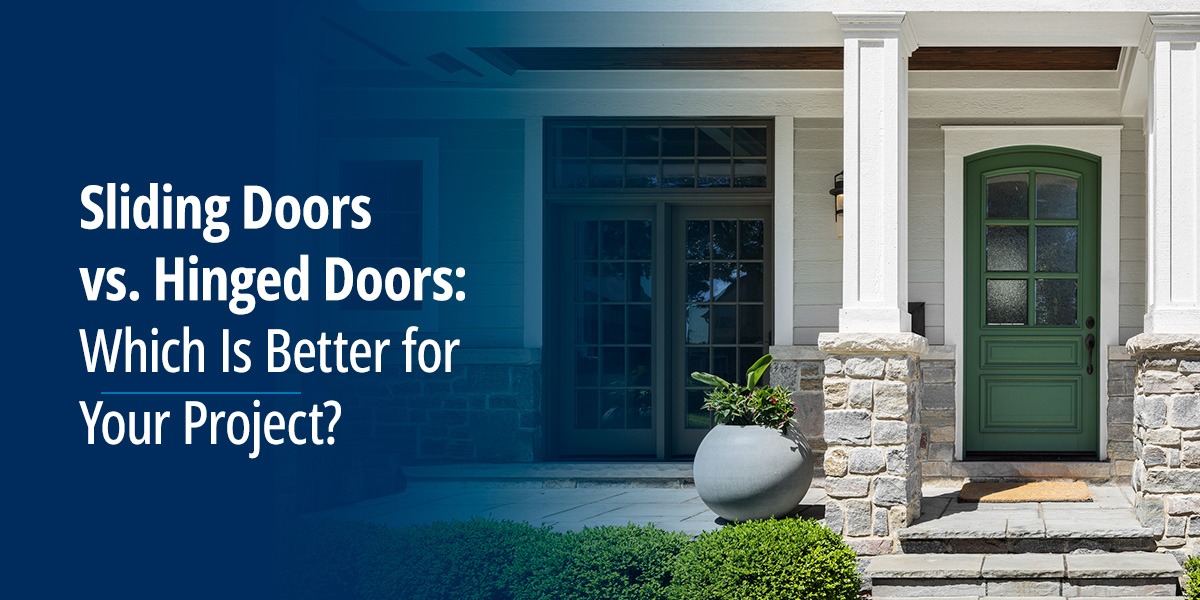


If you are about to embark on a new commercial project, consider the type of door you want to include to give the space the look and feel it deserves. While elegance, sophistication and luxury are vital elements, durability, longevity and practicality are all nonnegotiable.
Depending on the building infrastructure, it is important to weigh sliding doors versus hinged doors to determine which is a better fit. We compare the pros and cons of both options so you can make an informed decision.
A hinged door is the most traditional door option. It is mounted on two or three hinges along one vertical frame edge, allowing the door to swing inward or outward. Based on room layouts, hinged doors can be configured as left-handed or right-handed. They are convenient because they offer full opening access. Choose from hollow, solid or fire-rated cores to make doors stronger or safer.
Hinged doors are preferred for their simplicity, reliability and cost-effectiveness. They are often more affordable to purchase and install than sliding doors.
A sliding door glides along a top track, bottom track or both instead of swinging open like hinged doors. This design makes sliding doors worthwhile in tight spaces where hinged models might block traffic or furniture. Choose from single or multi-panel systems for different configurations and applications.
Common sliding door types include:
There are also hinged sliding doors, a hybrid design that slides on a track but includes hinge hardware for stability or unique motion.
Sliding doors are convenient when you do not want to sacrifice space. The benefits of internal sliding doors include:
While they are sleek and versatile, sliding doors have some drawbacks:
These traditional doors have been the selection of choice for many years. They are easily the most common type of door seen in residences and structures spanning many different industries, including offices, hospitals, apartment buildings and schools.
Hinged doors offer:
Some drawbacks of hinged doors include:
Price is often one of the first considerations when choosing a door. The exact cost depends on material, core, finish, hardware and order volume. For distributors, the decision often comes down to project requirements and customer priorities.
Hinged doors are usually less expensive. Their simpler construction and installation make them faster to manufacture and install. They are a cost-effective choice for large projects that prioritize budget and lead time.
Sliding doors often cost more due to their track systems, additional hardware and more complex installation. They might also need additional planning during construction. For example, pocket doors require framing adjustments to fit inside. However, sliding systems can balance out this cost by saving square footage and improving the space’s design value.
Sliding doors are ideal in areas that need to save floor space. Their track design gives designers more flexibility in furniture placement, corridor flow and interior layouts. Install sliding doors in:
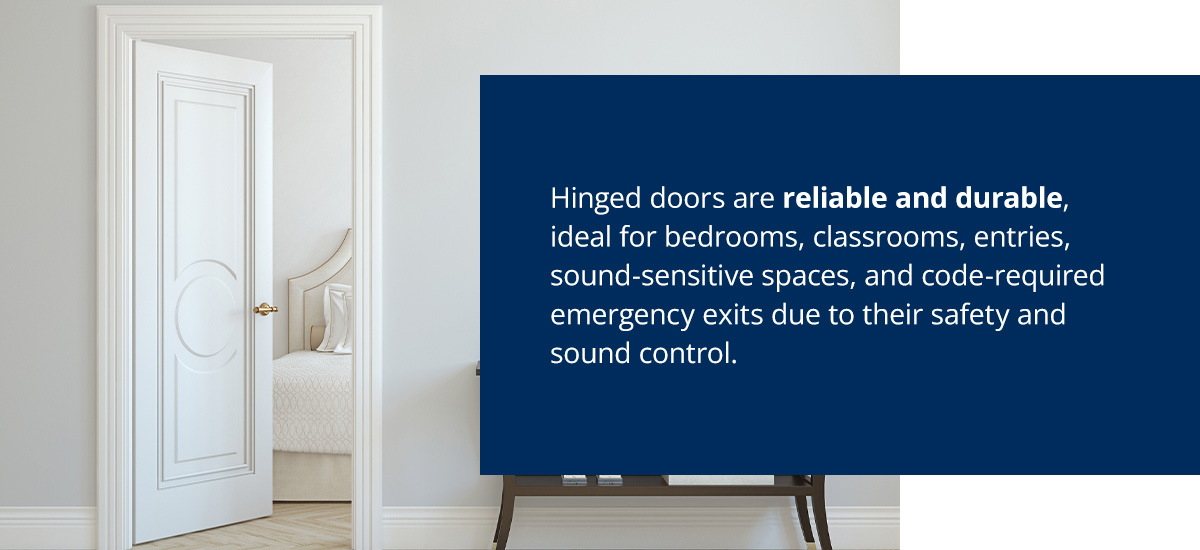
Hinged doors are a standard door option thanks to their reliability and durability. They are especially effective in spaces that need safety or sound control, including:
Along with weighing the pros and cons of sliding versus hinged doors, consider the following factors before you make your final decision:
Here are some answers to frequently asked door questions:
Installation costs depend on the door and space. Sliding doors are often more expensive to install because of their tracks.
Hinged doors can be safer because they open wider and predictably. Sliding doors also have a risk of pinching. Proper safety features can help prevent these hazards.
Traditionally, hinged doors were more energy-efficient since they create a tight seal. However, modern sliding doors can have specialty seals that make them energy-efficient, too.
Yes, designers can use sliding doors in different room types. Their space-saving design makes them stand out in small spaces, but they can also work well as an aesthetic choice.
Each door has advantages. Use hinged doors when spaces need full opening access, durability and stronger sound insulation. Use sliding doors to save space or emphasize modern designs.
Hinged doors usually have better insulation. Choosing a solid-core hinged door provides an effective seal. However, interior sliding wood doors with sophisticated seals can also offer effective insulation.
Both sliding and hinged doors need regular maintenance. Hinged doors might need occasional cleaning and hardware lubrication. Sliding doors need more track maintenance and cleaning to keep them moving smoothly.
Choosing between hollow and solid-core doors directly affects performance and price. Solid-core hinged doors typically offer better sound control, durability and fire rating, but these features make them more expensive. Hollow-core doors are lighter and more affordable. They are ideal in interior spaces, but you can adjust the door cores to meet budget and performance goals.
Whether your commercial interior door project is a single apartment unit or an entire office floor, the Manhattan Door team has you covered. We provide everything from veneers to plastic laminate doors to flush wood doors, and we can also create custom doors to suit specialized requirements. No job is too big or small for us. We offer fast turnaround times and professional, expert services to all our clients.
If you are ready to discuss your project, call us at (718) 963-1111 or contact us online with your request.