By: manhattandoor


In 2024, local fire departments responded to nearly 1.4 million fires that accounted for 3,920 civilian deaths and $19 billion in property damage. Fire-rated doors can withstand intense heat, acting as an essential barrier during a fire. As such, they play a major role in a building’s fire protection system. Learn more about fire-rated doors and why you need them for your business.
A fire-rated door is a specialized door that resists fire and smoke for a specific duration, typically between 20 and 180 minutes. Its dense construction prevents a fire from spreading, providing a crucial barrier much longer than an average door. These doors protect property and buy extra time for escape during a fire.
Fire-rated doors are constructed with a heat-resistant core, a durable frame and intumescent seals. First, the materials are inspected for safety and durability. The door is then assembled and tested in a furnace to confirm fire resistance properties.
Fire-rated doors are classified by their core materials — glass, timber, steel or composite — and time rating. Fire door ratings include:
20 minutes.
30 minutes.
45 minutes.
60 minutes.
90 minutes.
180 minutes.
You can typically find fire ratings in product names. For example, an FD30S resists fire for up to 30 minutes and keeps smoke from passing through. “30” indicates the fire rating, and “FD” and “S” indicate the level of protection.
Though regulations vary by location, basic fire door requirements include:
Units must have a label attached.
Units must have steel-bearing hinges.
Units must have “listed” hardware.
Units must be self-closing and self-latching.
Door frames must have an attached or embossed label.
Glass must not exceed 100 square inches per lite in a 60-minute-rated door with a B label or 90-minute-rated door with a B label.
Glass in 90-minute and 180-minute fire doors is heavily restricted and must be specifically listed and labeled for those door ratings.
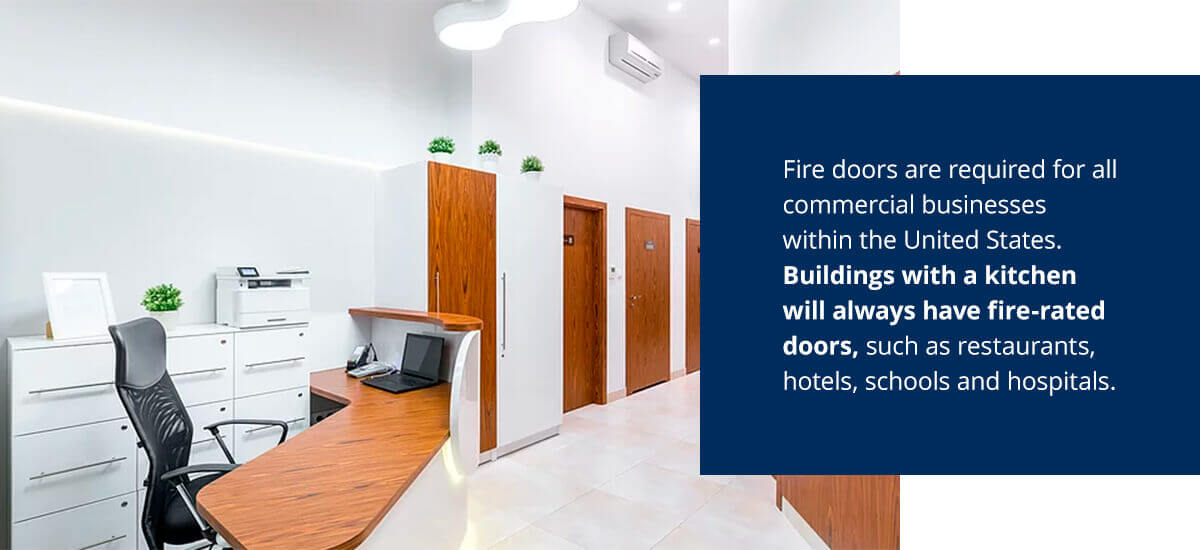
Whether you need a fire-rated door depends on your property type and local regulations. Fire doors are required for most commercial businesses in the United States. Buildings with a kitchen, such as restaurants, hotels and hospitals, will always have fire-rated doors. Other high-risk areas include laundry rooms, workshops and electrical equipment rooms.
The number of doors you need depends on your property’s layout. Generally, fire-rated doors should be at:
All main exits.
Stairwell entrances and exits.
Corridors and horizontal exits.
What level of fire resistance rating you need depends on the location and the fire rating classification of the wall where the door is being installed. Here are some of the required door ratings for specific areas of a building based upon location and purpose:
The fire resistance rating you need depends on the location of the wall where the door is installed. Required door ratings include:
180-minute rating: Doors that separate buildings or divide a building into designated fire areas.
90-minute rating: Openings to an elevator or stairwell.
60-minute rating: Doors that divide occupancies within a building.
45-minute rating: Openings in corridors or room partitions.
20-minute rating: Doors in corridors requiring smoke and draft control.
To make sure your doors are functioning properly, check these five areas:
Certification: You can find certification labels on the top or side of the door. These say whether it is a fire door, along with the fire rating.
Gaps: Check that gaps around the top and side of the door are less than 4 millimeters when closed.
Seals: Check for intumescent seals around the door and ensure they will expand when exposed to heat.
Hinges: Make sure all hinges are firmly connected and that no screws are missing.
Functionality: Make sure the door closes and latches firmly without sticking on the floor or frame.
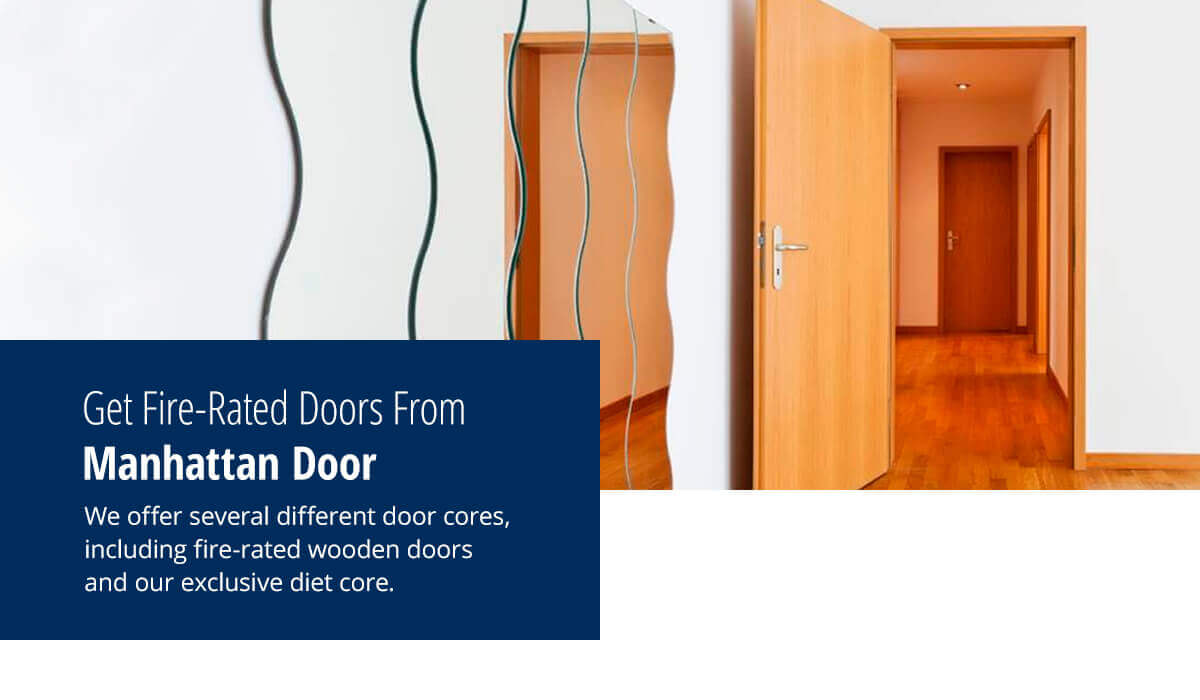
If you need fire-rated doors for your business, we offer several different door cores, including fire-rated wooden doors and an exclusive diet core. View the specifications for all of our doors and request a quote. If you have any questions, please reach out to us today!